
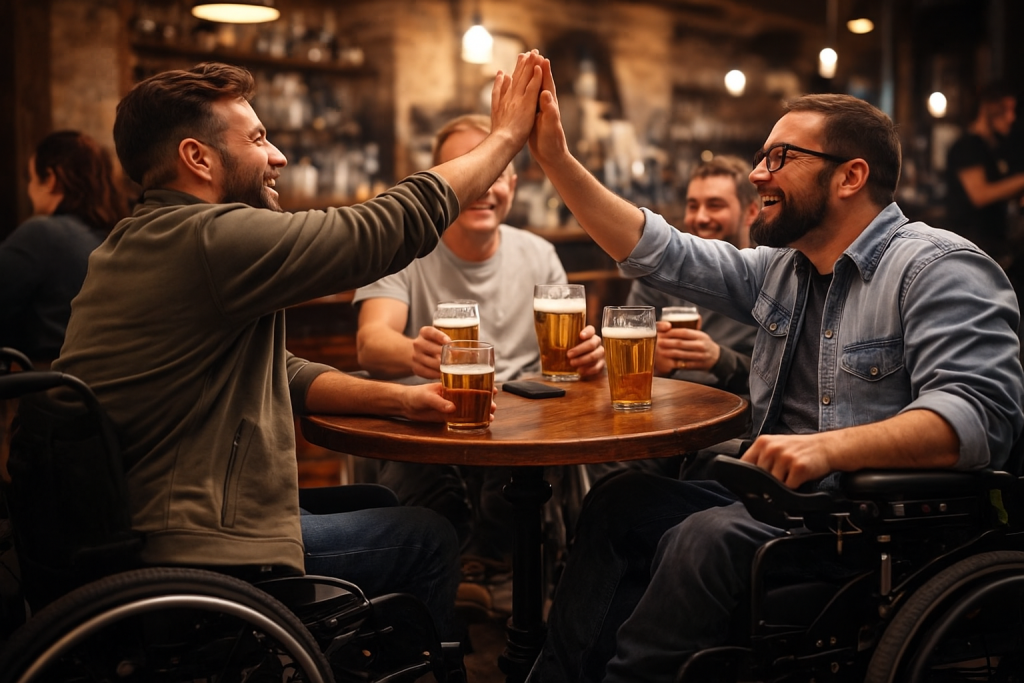
Why Men Thrive Together: The Science of Mateship, Connection & Lived Experience
For decades, men have been told to handle hardship in silence – especially when it involves disability, diagnosis, or mental health.
But research keeps proving something powerful:
men don’t get better by going inward. We get better by going together.
Connection isn’t a “nice to have”.
It’s biology. It’s medicine. And for many of us, it’s survival.
1. Connection Reduces Symptoms – Literally
Long-running studies on social connection and health show the same pattern:
men with strong social ties experience lower stress, fewer depressive symptoms, and better overall health outcomes.
They also tend to live longer, not metaphorically – literally.
In men with disability or chronic conditions, the benefits of connection can be even more obvious:
- lower perceived pain
- better coping with symptoms and flare-ups
- less isolation and shutdown
- better health decision-making
- higher reported quality of life
Human connection helps calm the parts of the brain responsible for threat and hypervigilance – the exact circuits that light up during diagnosis shock, trauma, and ongoing illness.
2. Mateship Strengthens Identity
Men with disability often talk about losing identity:
“Who am I now?”, “Where do I fit?”
Research on peer groups and social support shows that spending time with others who “get it” helps rebuild:
- confidence
- identity and sense of self
- purpose and meaning
- belonging and community
- motivation to keep going
You can’t download that from a self-help book. It only happens in community.
3. Lived Experience Is Its Own Kind of Medicine
Professional advice matters. But lived experience hits differently.
When a man hears someone say,
“Mate, I’ve been through that,”
the nervous system responds. The fear centre in the brain can settle a little. Shame eases off. There’s a sense of,
“Okay, maybe I’m not broken. Maybe I’m just human.”
Peer-led programs across mental health, disability, veterans’ services and chronic illness keep showing similar benefits:
- increased engagement and attendance
- improved emotional regulation
- higher resilience and hope
- better long-term outcomes
Lived experience doesn’t replace clinical support – but it does something unique:
it proves in real time,
“You’re not alone, and you’re not done.”
4. Conversation Is Prevention
The data on men is brutal: we’re more isolated, more reluctant to seek help, and more vulnerable to silent struggle.
But one thing is clear – regular, structured check-ins reduce the risk of crisis. Even a single supportive conversation each week can shift a man’s trajectory.
Not always therapy. Not a diagnosis talk. Just real conversations between good men.
So Why Mendis?
Mendis exists for exactly this reason.
It’s a place where men with diagnoses, disability, or complicated life stories can show up honestly – without having to explain their entire medical file or pretend they’re fine.
A place where lived experience isn’t something to hide… it’s the thing that connects us.
A place where men can slowly rebuild identity, confidence, humour, and hope.
We meet online twice a week. It’s free to try. There’s no pressure to talk – you can just listen until you’re ready.
If the research is clear about anything, it’s this:
men do better together.
Join us on Zoom:
https://mendis.digiwell.com.au/zoom
Your first two sessions are on us. You’re welcome here – truly.
— Todd | Mendis